The Irreversible AI Wave: Why Data Centers Are the New Gold of Real Estate

Artificial intelligence has moved from the pages of tech publications into the physical world. The abstractions of machine learning and generative models are now rooted in steel-framed buildings, humming with servers, consuming electricity, and anchored on thousands of acres of powered land. Data centers are no longer a niche real estate category; they are the digital factories of the 21st century. The numbers, the pace of development, and the competitive race for power and land point to one conclusion: AI-driven data center construction is not a trend. It is a transformation.
From Hype to Bricks: Capital Commitments at an Unprecedented Scale
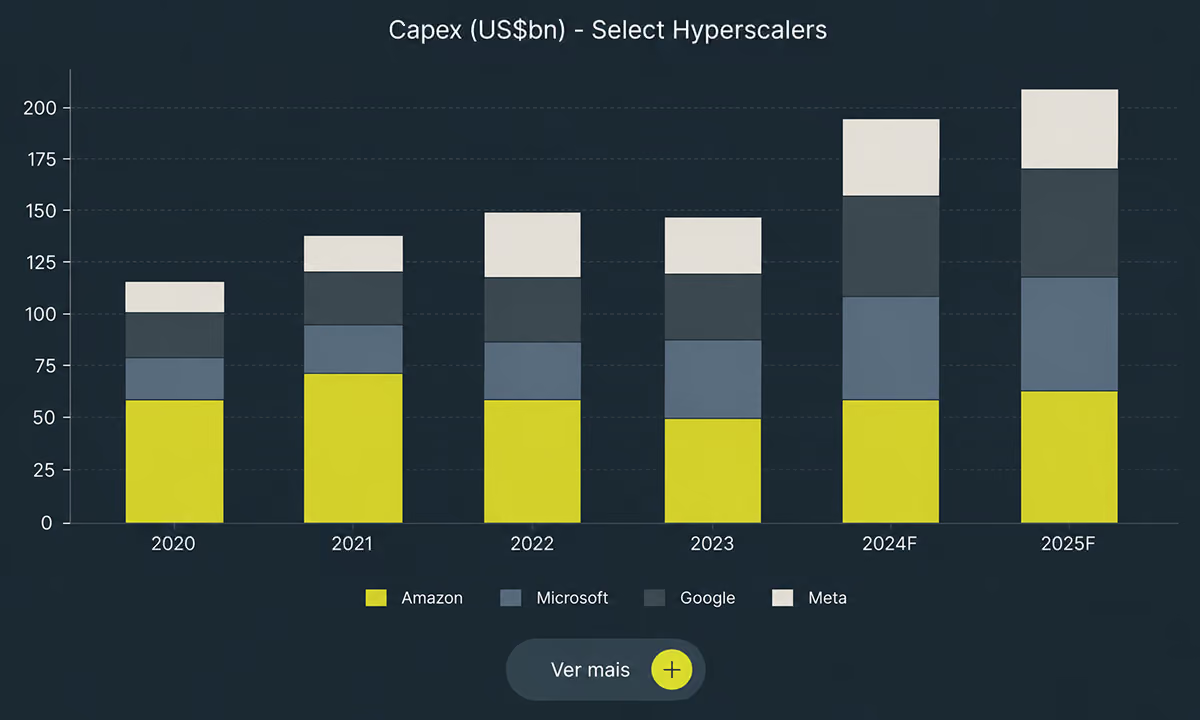
The scale of infrastructure investment in 2025 is unprecedented in the history of the commercial real estate market. Microsoft alone is committing approximately $80 billion this year to build and expand AI-ready data centers, the largest infrastructure bet in the company's history. Nearly half of that spending will be concentrated in the United States, with much of it aimed at providing the power density and network interconnectivity required to support advanced AI workloads.
Meta is matching this urgency. In addition to a planned $65 billion investment in AI infrastructure for 2025, the company has secured $29 billion in financing from PIMCO and Blue Owl to fund massive campus developments in rural Louisiana. One of these projects will require more than 2 gigawatts of electricity—comparable to a nuclear power plant—to operate at full capacity.
They are not alone. Collectively, the major hyperscalers—Microsoft, Meta, Amazon, Google, and others—are on track to spend more than $350 billion in 2025 on AI-related infrastructure. McKinsey estimates that by 2030, global data center capacity will require approximately $6.7 trillion in investment, with AI workloads accounting for nearly 70% of total demand. These are not theoretical forecasts—they are commitments that are already breaking ground, pouring foundations, and straining global power grids.